
Last updated November 23, 2026
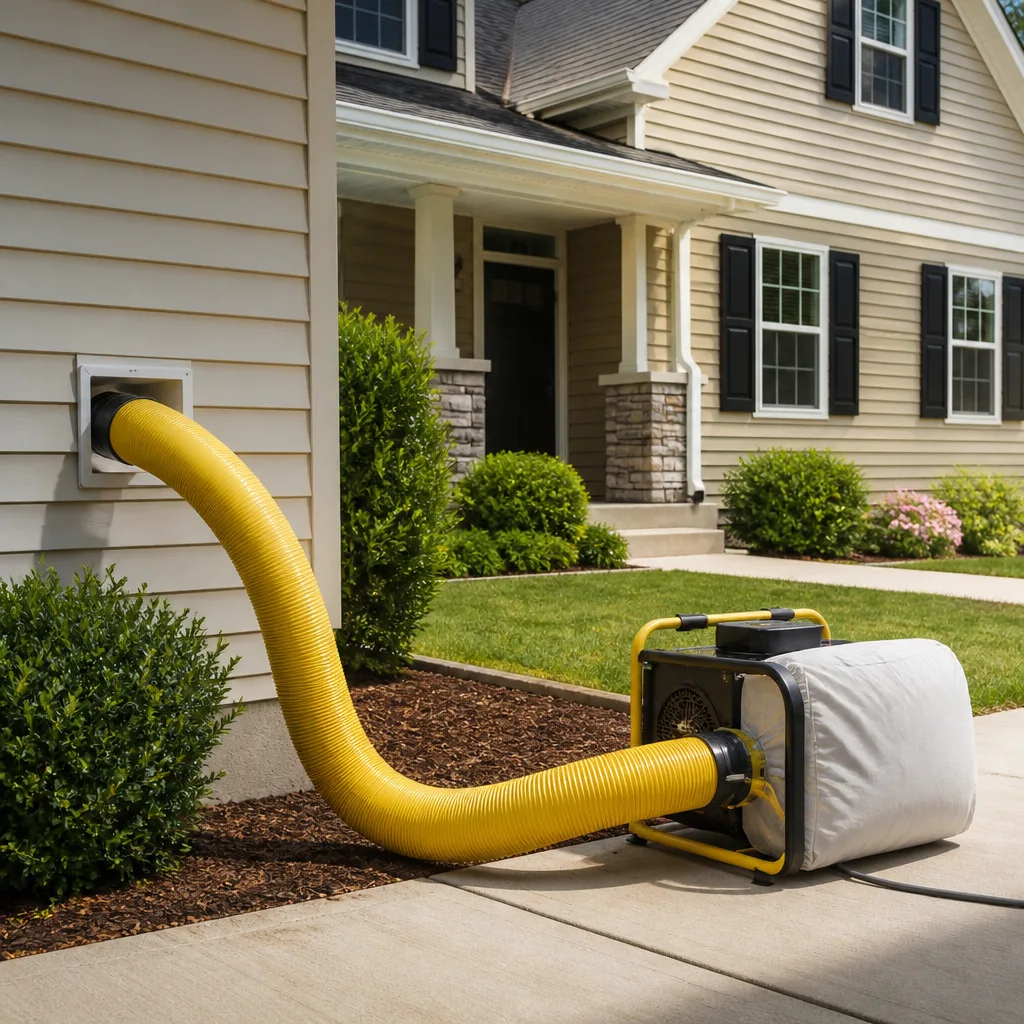 Whole-home duct cleaning
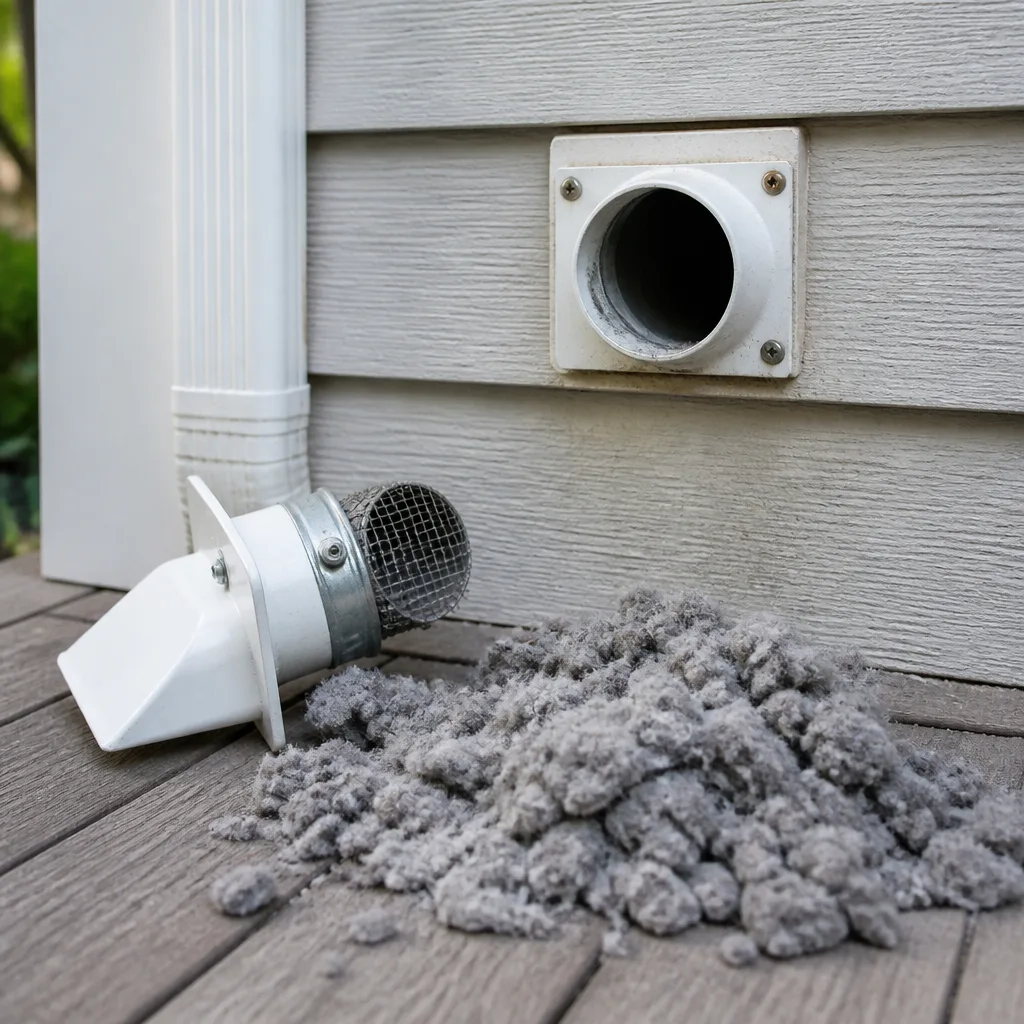 Dryer vent cleaning
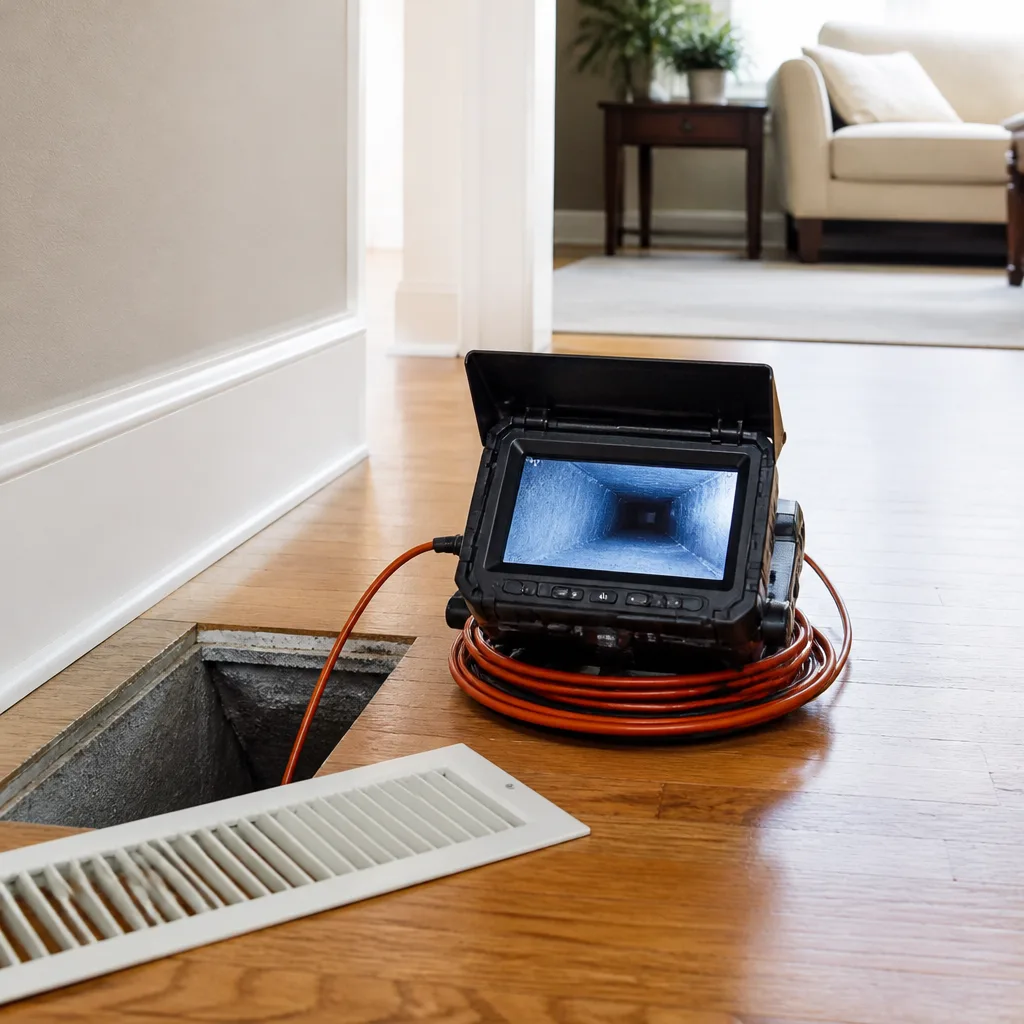 Camera inspection
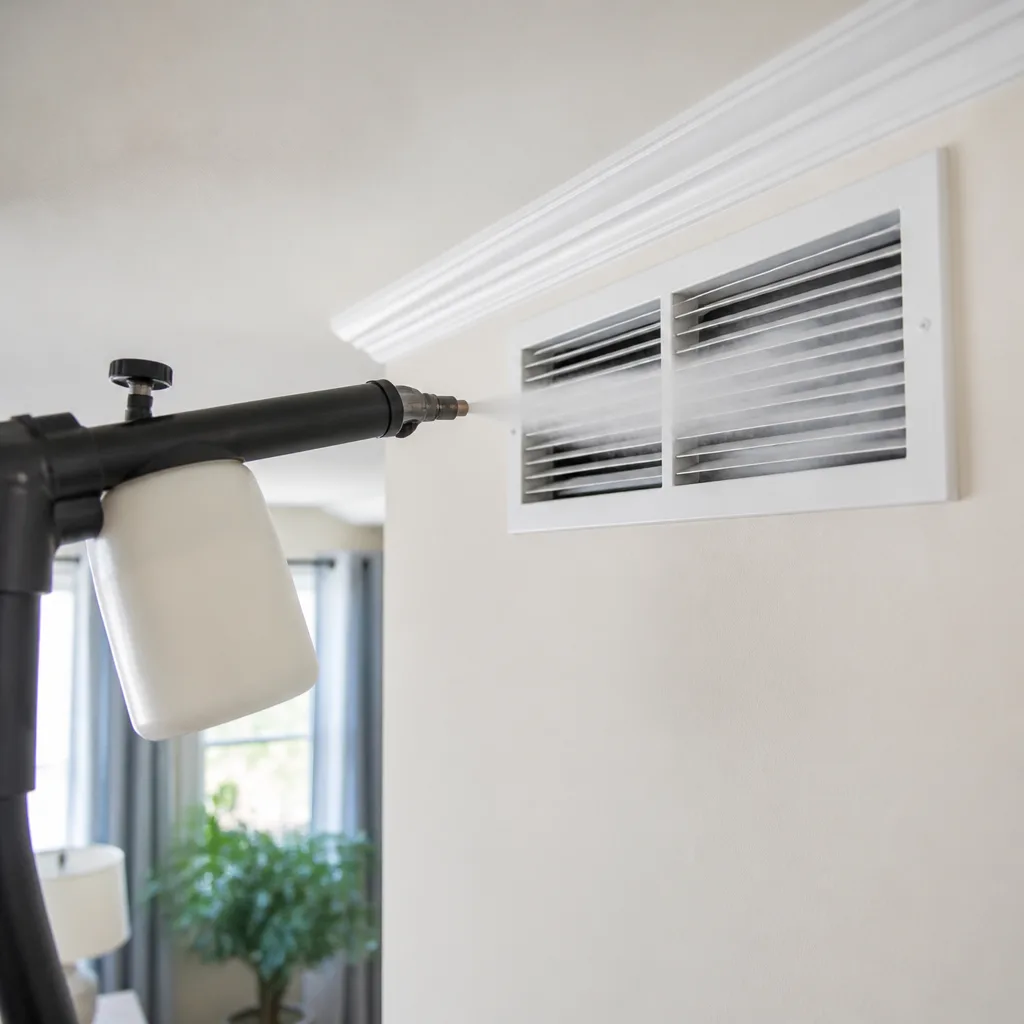 Sanitizing & deodorizing
Whole-system duct and dryer vent check with before-and-after photos - you see exactly what came out of your vents
That "$99 whole-house special" is a bait ad - the real number appears once they are in your hallway, or the "clean" is a shop-vac at the register. We photograph the inside of your ducts before and after instead.
DIY vs Professional Air Duct Cleaning: The Tooele Homeowner’s Decision Guide
Most homeowners are perfectly capable of pushing a vacuum hose into a floor register. That’s not really the question. The question is whether a 6-gallon shop vac moving roughly 55 CFM of air can do anything meaningful to a 2,000 square foot duct system when a contractor-grade machine moves 2,000 to 4,000 CFM of negative pressure. It can’t, and the difference isn’t marketing spin – it’s basic fluid dynamics. Using a shop vac on your ducts is the mechanical equivalent of draining a bathtub with a drinking straw. Debris moves around, but it never leaves. In this guide we’ll draw the technical line between what you can honestly do yourself in a Tooele home and where consumer equipment stops being useful, so you can make a decision based on your actual system rather than a coupon or a guilt trip.
Quick Answer
DIY air duct cleaning is genuinely useful for register and grille cleaning, dryer vent lint removal, and visual inspection, but it cannot clean the inside of your duct runs because consumer vacuums don’t generate enough negative pressure to extract embedded debris. Professional cleaning is required when you have post-renovation dust, confirmed mold or pest activity, new construction debris, or a system that hasn’t been cleaned in several years. Most Tooele homes fall somewhere between those two poles, and this guide helps you find your spot.
Styles & brands we work with
- Whole-home duct cleaning
- Dryer vent cleaning
- Camera inspection
- Sanitizing & deodorizing
Table of Contents
- Why CFM and Negative Pressure Decide the DIY Question
- What You Can Honestly Do Yourself
- The Real Risks of Improper DIY Duct Cleaning
- When Professional Cleaning Is Unambiguously Required
- A Decision Framework for Your Tooele Home
- How a Professional Duct Cleaning Actually Works
- Beyond Cleaning: Sealing, Sanitizing, and Air Quality
- What Professional Duct Cleaning Costs and Why Quotes Vary
Why CFM and Negative Pressure Decide the DIY Question
Air duct cleaning is a game of pressure differentials. To pull dust, lint, pet hair, and construction debris out of a duct run, you need to create a strong negative pressure inside the ductwork so that air – and everything suspended in it – flows toward your collection point instead of into your living room. The number that describes that flow is CFM, or cubic feet per minute. Consumer vacuums operate in the 50 to 150 CFM range on their best day. Contractor-grade duct cleaning systems like the Rotobrush and Nikro units we use operate in the 2,000 to 4,000 CFM range when paired with proper negative-air containment.
That’s not a small gap. It’s roughly a 40 to 70-fold difference in airflow, and airflow is what actually moves debris. A shop vac pressed against a register creates a small, weak suction pocket right at the opening. A few inches into the duct, the suction has dropped off to nearly nothing. Meanwhile the rotary brush head on a contractor system is physically agitating the duct walls while the negative-air machine pulls the loosened material out through a HEPA-filtered collection unit.
There’s a second piece that matters just as much: containment. When you clean ducts, you loosen a lot of material. If that material isn’t captured at the source, it ends up on your furniture. Abatement Technologies negative-air filtration units are what keep the debris inside the duct system during the job. A shop vac has no equivalent, which is why DIY attempts often make indoor air quality worse before it gets better.
- Consumer shop vac: 50-150 CFM, no containment, no rotary agitation
- Contractor duct system with negative air: 2,000-4,000 CFM, HEPA containment, rotary brush and air whip
- What actually removes embedded debris: pressure differential plus mechanical agitation, working together
- What a shop vac does: moves surface dust a few inches closer to the register
If you’ve ever cleaned a register with a shop vac and noticed the return grille in the next room got dustier, you’ve seen this in action. The vacuum didn’t clean the duct. It just shifted the load.
What You Can Honestly Do Yourself
There’s a real DIY scope, and it’s worth doing. Homeowners who stay within these boundaries genuinely improve their system, avoid a lot of unnecessary calls, and keep their ducts in better shape between professional cleanings. The honest DIY lane is about surface-level maintenance and inspection, not duct interior cleaning.
- Clean the register covers and grilles. Pop them off, wash them in the sink or hose them down outside, dry them fully, and reinstall. Dust caked on the grille restricts airflow and gets pushed back into the room every time the system runs.
- Vacuum the immediate duct opening. With the grille off, use a brush attachment on a shop vac to clean the first inch or two of the duct boot – the metal box behind the grille. This is where most visible dust accumulates and where a shop vac is actually useful.
- Clean your dryer vent lint trap and short run. The lint trap should be cleaned every load. The short section between the trap and the wall can be brushed out periodically. This is one of the highest-value DIY tasks in the house, and it’s also one of the most common places homeowners get complacent. If your dryer vent run goes more than a few feet through walls or up to the roof, that’s where dryer vent cleaning becomes the right call.
- Inspect visually with a flashlight and phone camera. Shine a light into the register boots and take photos down the runs where you can see. You’re looking for visible dust buildup, moisture, pest droppings, or torn flex duct liner. What you find tells you whether it’s time to call.
- Change your HVAC filter on schedule. A clean filter is the single biggest thing you can do to keep your ducts cleaner. In Tooele, where spring winds kick up dust off the west desert and summer wildfire smoke drifts in from neighboring valleys, filters load faster than in many parts of the country. Check monthly and replace based on what you see, not on the calendar.
That’s the honest DIY lane. It doesn’t include running a shop vac hose deep into the ductwork. That step creates more problems than it solves, and the next section explains why.
The Real Risks of Improper DIY Duct Cleaning
The reason a shop vac in the ducts is a bad idea isn’t just that it doesn’t clean. It’s that it can make things measurably worse, and some of the damage isn’t visible until you’re paying for a repair. In our experience, the three most common problems from improper DIY attempts all stem from the same root cause: too much agitation and not enough extraction.
Dislodged mold colonies. If there’s any mold growth inside a duct – which happens in humid climates, after a water intrusion, or in poorly ventilated systems – a shop vac or blow dryer will aerosolize spores without capturing them. The mold that was settled in a dark duct corner is now cycling through every room of your house. That’s a health concern for anyone with allergies or respiratory sensitivities, and it’s a job that should be handled with negative-air containment and post-cleaning sanitizing, not a shop vac on a Saturday.
Damaged flex duct liner. A lot of Tooele homes use flex duct for the final runs to registers. The inner liner is thin, and a rigid shop vac wand or brush pulled through at the wrong angle will tear it. A torn liner means the duct is now leaking conditioned air into the wall cavity, and that’s an energy loss you can’t see until your utility bill catches up.
Pressure imbalances. If you aggressively clean some runs and leave others alone, or if you accidentally disconnect a duct connection while wrestling a hose through, you can create a pressure imbalance across the system. Some rooms get plenty of supply air, others get starved, and the whole system runs less efficiently.
None of this is meant to scare you out of any DIY effort. The register-and-grille work described in the previous section is safe and worthwhile. But the interior of your ducts is a place where the wrong tool can do more harm than good.
When Professional Cleaning Is Unambiguously Required
Some situations aren’t a judgment call. If any of the following apply to your Tooele home, professional cleaning is the correct choice, and DIY is a waste of your afternoon.
- Post-renovation debris. Drywall dust is the worst offender in any duct system. It’s fine, it’s alkaline, and it settles into every horizontal run and boot. Standard shop vac filtration won’t capture drywall dust – it clogs and blows it back out.
- New construction dust. Same problem, plus construction adhesive residues, sawdust, and framing debris. In Tooele’s newer subdivisions, this is one of the most common calls we get from homeowners in the first year.
- Confirmed mold or pest activity. If you’ve seen mold, droppings, or evidence of rodents or insects inside the ductwork, professional containment and sanitizing is the safe path forward.
- Recent water damage or intrusion. Any duct system that got wet needs to be inspected and treated – mold growth is a near certainty in wet ductwork.
- Musty odors that don’t clear. Odors coming from registers are usually a sign of organic growth or trapped moisture somewhere in the system.
- Visible contamination at registers. If you’re seeing dust plumes come out of the registers when the system kicks on, the contamination level is already past surface cleaning.
- HVAC replacement or major repair. When the system is opened up, half the job is already done – this is the ideal time to clean the ducts, seal the connections, and reset the system’s baseline.
If you’re not sure whether you’re in one of these categories, the right move is a professional inspection. You can schedule a duct inspection and air duct cleaning to get a straight answer rather than guessing.
A Decision Framework for Your Tooele Home
If you’re not in the “unambiguously required” camp, here’s how to think through the decision. Three variables matter most: how old the system is, when it was last cleaned, and what you can actually see and smell.
System age
Ductwork in homes under five years old is usually in good shape unless the home was recently built and the ducts were never cleaned after construction. If you bought new construction in Erda or Stansbury Park and never had the ducts cleaned post-build, do that first. Homes in the 15 to 30 year range – which includes a lot of the established neighborhoods around downtown Tooele and Pine Canyon – are more likely to have accumulated debris, worn duct sealant, or disconnected runs that need attention.
Last cleaning date
Most homes benefit from a full cleaning every three to five years, sometimes sooner in dusty conditions. If you can’t remember the last cleaning, or if you’ve never had one, it’s time. This is the single most useful piece of information in your decision – and if you don’t have it, the honest answer is to schedule an inspection.
Observable contamination
The easiest test without any tools: turn the system on and stand in a room. Look at the register. If dust plumes out, that’s your answer. If you see a fine dust film on surfaces even after cleaning, or if the house smells faintly musty when heating or cooling kicks on, that’s your answer too. If none of that applies and the system has been cleaned in the last three years, you’re probably fine for now.
The framework in short
- If any of the “unambiguously required” conditions apply → call a professional.
- If the system is under five years old and was cleaned after construction → keep doing the register-and-grille DIY work, re-evaluate in a year.
- If the system is over ten years old and hasn’t been cleaned in five or more → schedule professional cleaning.
- If you see dust plumes, smell mustiness, or notice visible contamination → schedule professional cleaning.
- If none of the above apply → do the DIY register work and check back annually.
That framework handles about 80 percent of the cases we see. The rest are homes with specific situations – recent water damage, pest history, a renovation just wrapped up – and those need a professional eye.
How a Professional Duct Cleaning Actually Works
Understanding what the pro side actually does makes the DIY vs. professional question clearer. It’s not one machine and a technician pulling a hose around. It’s a coordinated process where every step supports the next.
- System inspection and setup. We start by locating all the supply and return registers, mapping the duct layout, and identifying the main trunk and branch runs. Any accessible components that need temporary removal – register covers, some return grilles – come off first.
- Negative-air containment. An Abatement Technologies negative-air filtration unit is set up at the main trunk or at a strategic return. This creates a low-pressure zone inside the ductwork so that everything loosened during cleaning gets pulled toward the collection unit rather than into your living space. This single step is what makes professional cleaning different from any DIY approach.
- Rotary brush and air whip cleaning. A Rotobrush or Nikro system runs a rotary brush through each duct run at controlled speed and pressure, loosening caked-on debris from the walls. This is paired with compressed air whips and agitation tools for the branches that need them. The brush dislodges; the negative air extracts.
- HVAC component cleaning. Cleaning the ducts without cleaning the coil, blower, and drain pan is a half job. The components grow dust and biological growth the same way the ducts do. HVAC cleaning at the same time as the ducts resets the whole system.
- Optional sanitizing. After mechanical cleaning is complete, a Guardsman-grade sanitizing product can be applied to control microbial growth and odors. This is a follow-up step, never a substitute for the cleaning itself.
- Verification and photos. Before-and-after photos of the actual ducts in your home are the honest way to confirm the work. If a contractor can’t or won’t show you what they cleaned, that’s a red flag.
Our technicians have up to 9 years of experience doing this work, and the process above is what that experience is built on. It’s also why we tell people to expect it to take a few hours, not twenty minutes. If a company can clean a whole house in an hour, they’re not cleaning the whole house.
If you’re curious how the full process fits into a broader service picture, you can see the full scope of Tooele Air Duct Cleaning services here.
Beyond Cleaning: Sealing, Sanitizing, and Air Quality
Clean ducts are only half the job. Even a thorough cleaning leaves you with whatever the ducts were attached to before the cleaning – and that includes every leaky joint, disconnected run, and failed duct sealant in the system. In Tooele homes, especially older ones, duct leakage is common and costly. We follow the air from the intake to the exhaust, and the exhaust often leads out through a hundred small leaks you’ll never see.
Duct repair and sealing
If your ducts are leaking, your HVAC system is working harder than it should. Conditioned air escapes into wall cavities and attic spaces, you pay for heating and cooling you never feel, and the system runs longer to compensate. Duct repair and sealing addresses the root cause – not by hosing down the outside, but by finding and sealing the leaks at the joints and connections where they originate. This is a service we consider a natural follow-on to cleaning, and in many homes it delivers a bigger comfort return than the cleaning itself.
Sanitizing after cleaning
Mechanical cleaning removes the physical debris; sanitizing addresses the microbial load that remains. Guardsman-grade sanitizing products are applied after the cleaning is done, not as a substitute for it. This step matters most in homes with allergy concerns, musty odors, or a history of moisture intrusion, and it’s the correct order of operations: clean first, sanitize second.
Long-term air quality upgrades
Once the system is clean and sealed, the next question is how to keep it that way. We work with Honeywell and Aprilaire product lines, which means we can talk through filtration upgrades, humidity control, and air quality monitoring options that fit the system you already have. The goal isn’t to sell you a pile of equipment – it’s to give you a clear path from “the ducts are clean right now” to “the ducts stay clean and the air stays comfortable.”
What Professional Duct Cleaning Costs and Why Quotes Vary
Air duct cleaning quotes in Tooele vary more than almost any other home service. The range usually runs from a couple hundred dollars for a small home with a simple system up to several hundred for larger homes, multiple systems, or add-on services like dryer vent cleaning or HVAC component cleaning. The variation is real, but it’s driven by a few specific factors.
- Number of systems. A home with one HVAC system costs less than one with two. Tooele homes with a finished basement often have two.
- Number of registers and returns. More openings mean more runs to clean, and each one takes time.
- Duct layout and accessibility. Straight runs with easy access clean faster than mazes of flex duct in tight attic spaces.
- Contamination level. A home that’s never been cleaned in 20 years takes longer than one cleaned three years ago.
- Add-on services. Dryer vent cleaning, HVAC coil cleaning, sanitizing, and duct sealing each add to the total.
- Equipment quality. A company running a contractor-grade Rotobrush or Nikro system with negative-air containment charges more than a company running a shop vac on a hose. The difference shows in the result.
We set one flat price per system, agreed before work starts, and give you before-and-after photos of your own ducts when we’re done. The written estimate is what sets the final price. No coupon games, no per-vent upcharges, no surprise line items after the truck is in the driveway. If a quote sounds too good to be true, it usually is – the company plans to sell you add-ons once they’re in the house.
Common Mistakes to Avoid
- Running a shop vac deep into the ductwork. It agitates debris without extracting it, which spreads contamination into the home and can damage flex duct liner on the way in. Stick to the register boots and let a professional handle the interior.
- Trusting a quote that’s dramatically lower than everyone else’s. In our experience, the cheapest quote in town is usually a door-opener for add-on sales once the technician is inside. Ask what equipment they’ll use, whether they run containment, and whether they provide before-and-after photos.
- Cleaning the ducts but skipping the dryer vent. Dryer vents are a fire risk when lint builds up, and they’re rarely cleaned as part of a standard duct job unless you ask. Make it part of the same visit.
- Cleaning the ducts but not the HVAC components. The coil and blower are just as dirty as the ducts, and skipping them means the ducts get re-contaminated quickly. Clean the whole system.
- Assuming new construction doesn’t need cleaning. New ducts are the dirtiest ducts, because they were installed during the messiest phase of construction. If your Tooele home is newer and was never cleaned post-build, put it on the list.
- Ignoring the musty smell. Odors that come from registers and don’t clear after cleaning are a sign of moisture or biological growth. That’s not a “clean the registers and hope” situation.
- Skipping the filter. A clean duct system connected to a clogged filter just re-contaminates the moment the system runs. Change the filter on schedule.
See the difference
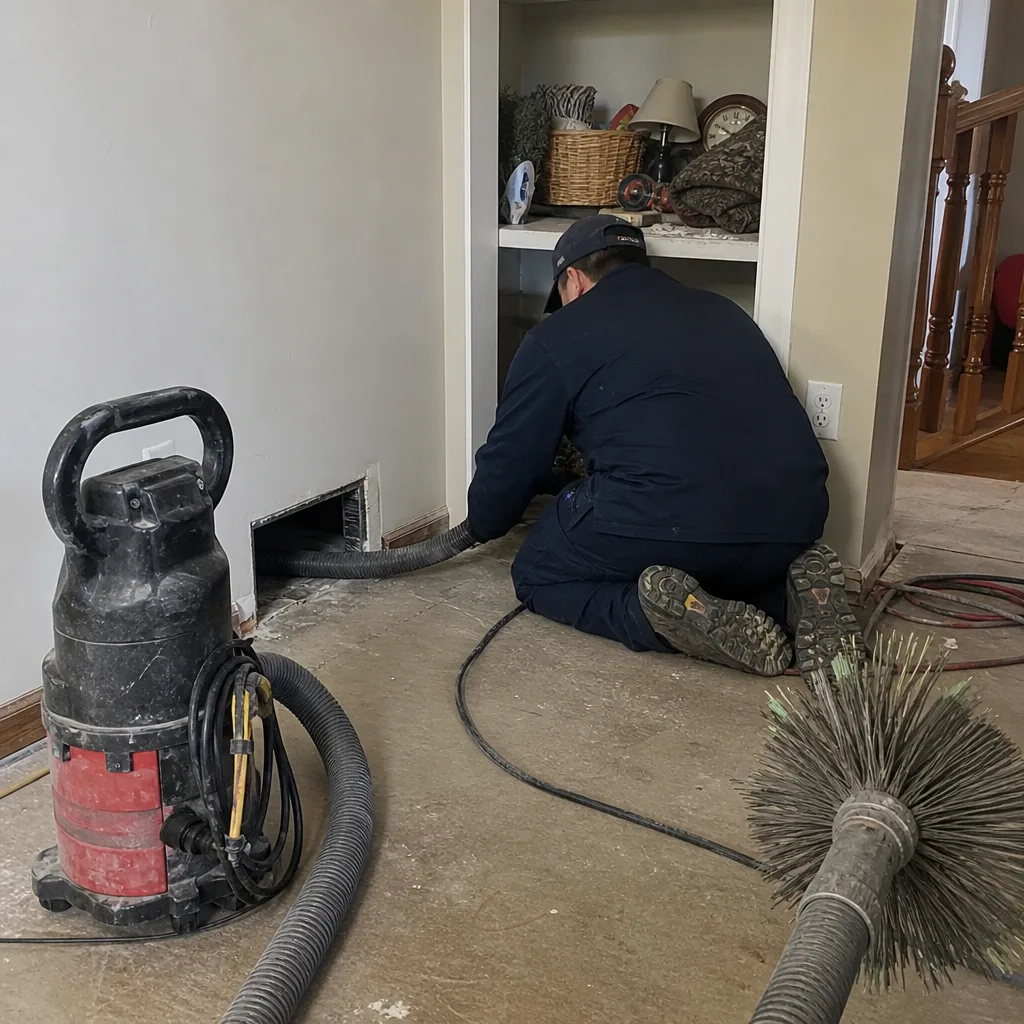 Before
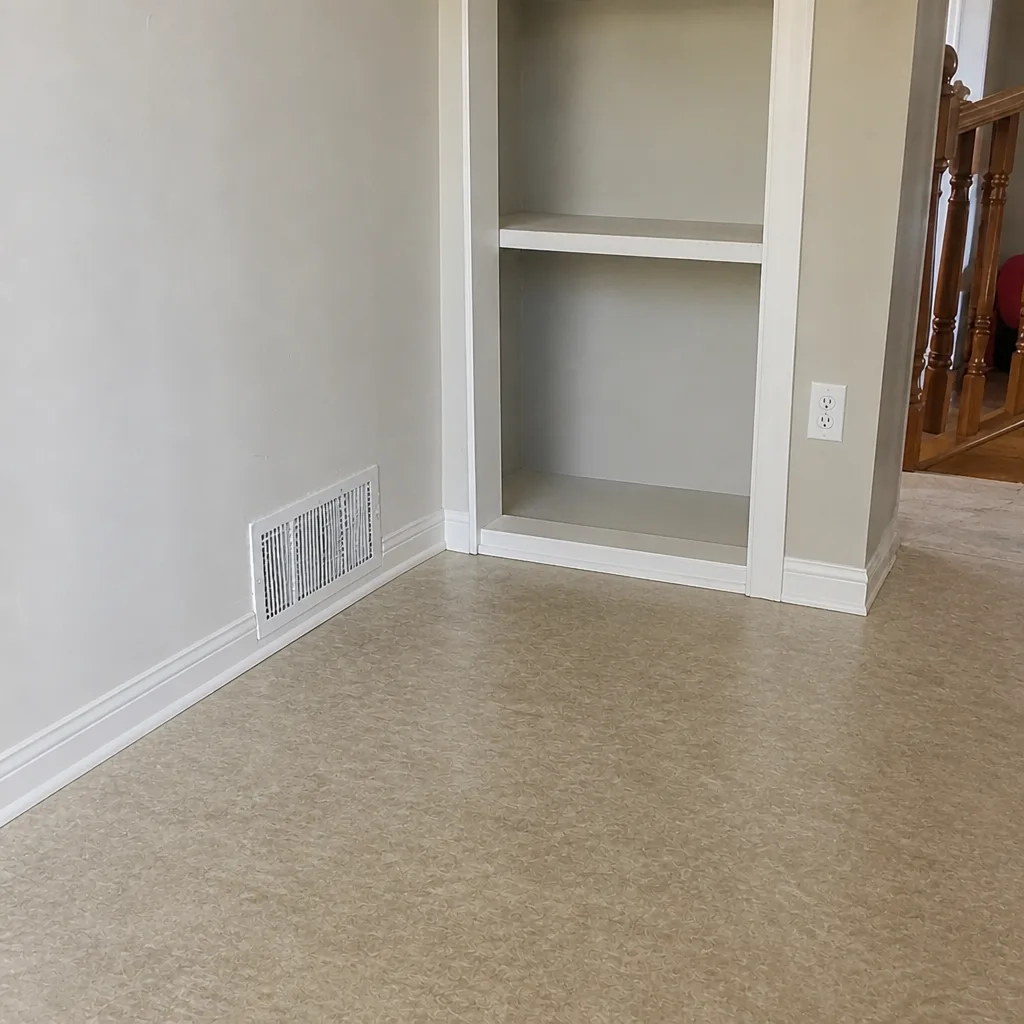 After
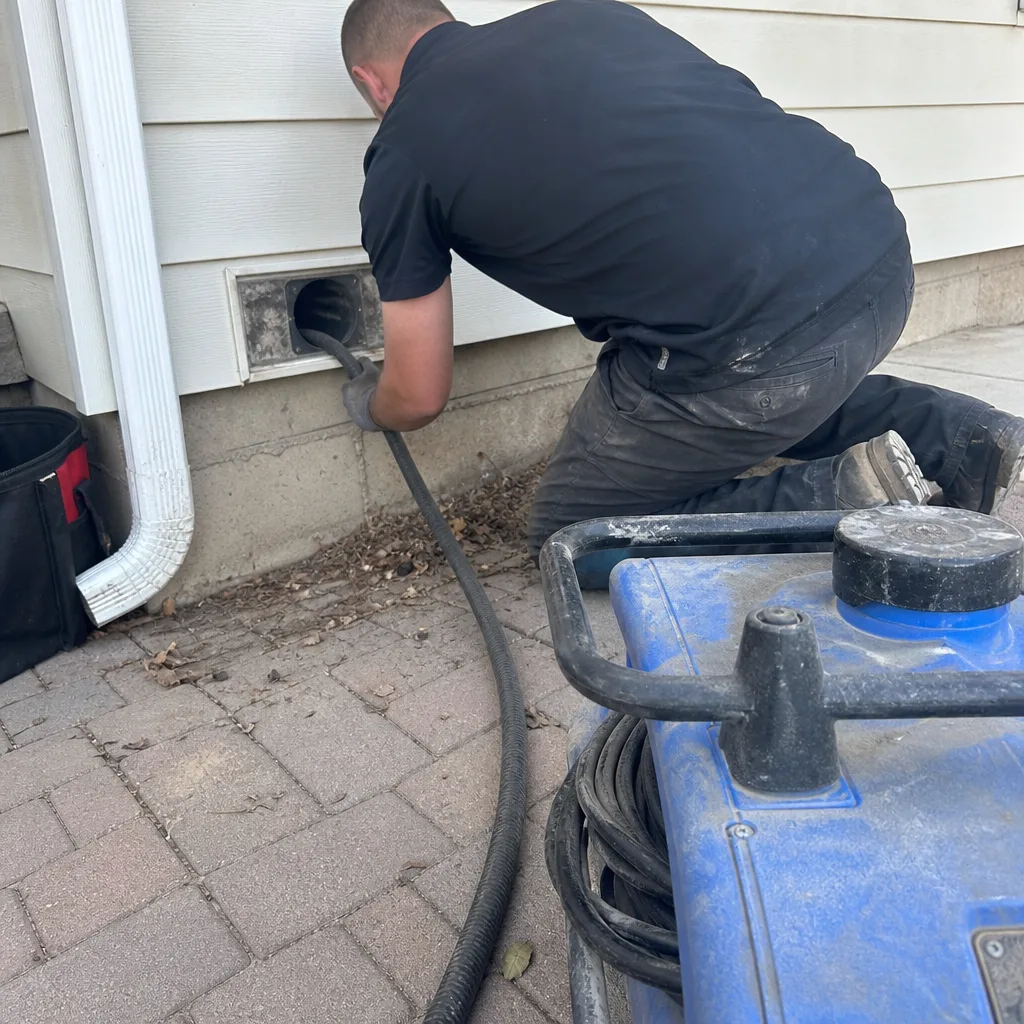 Before
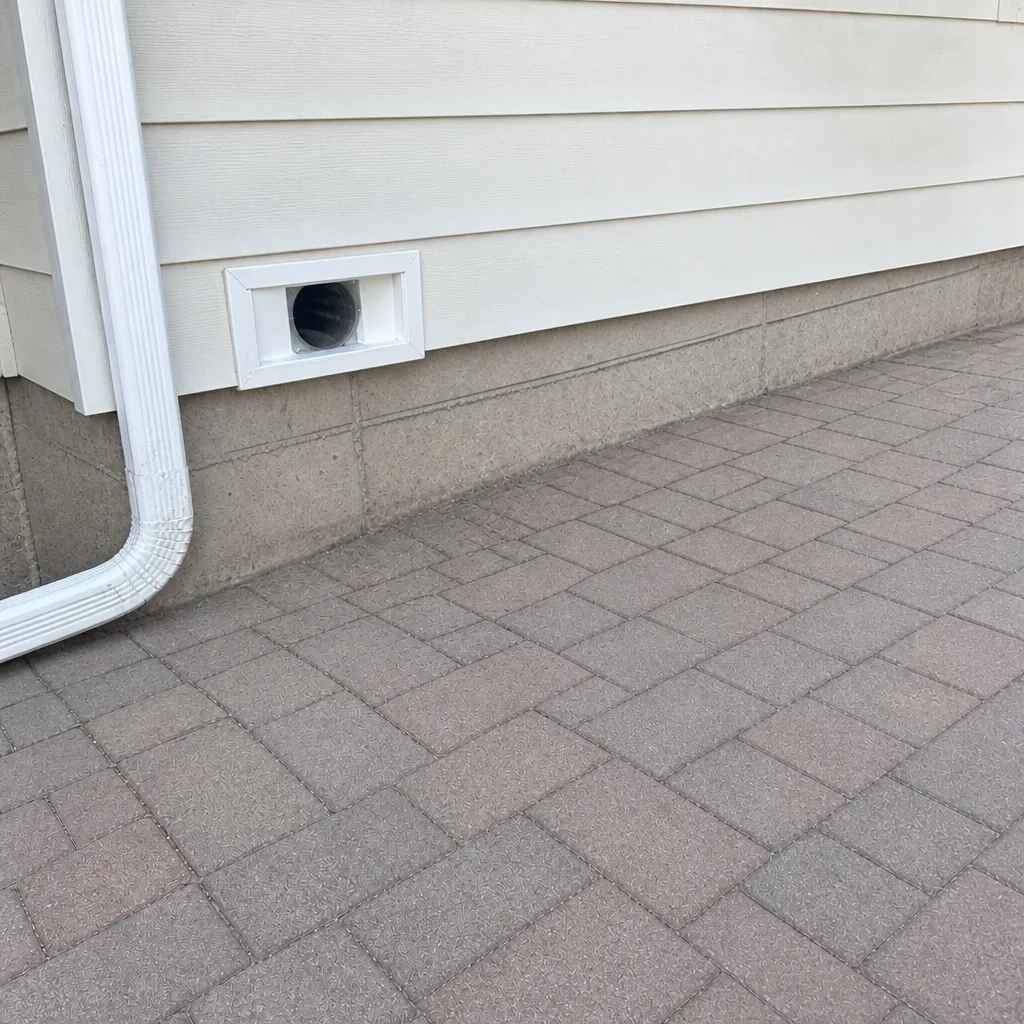 After
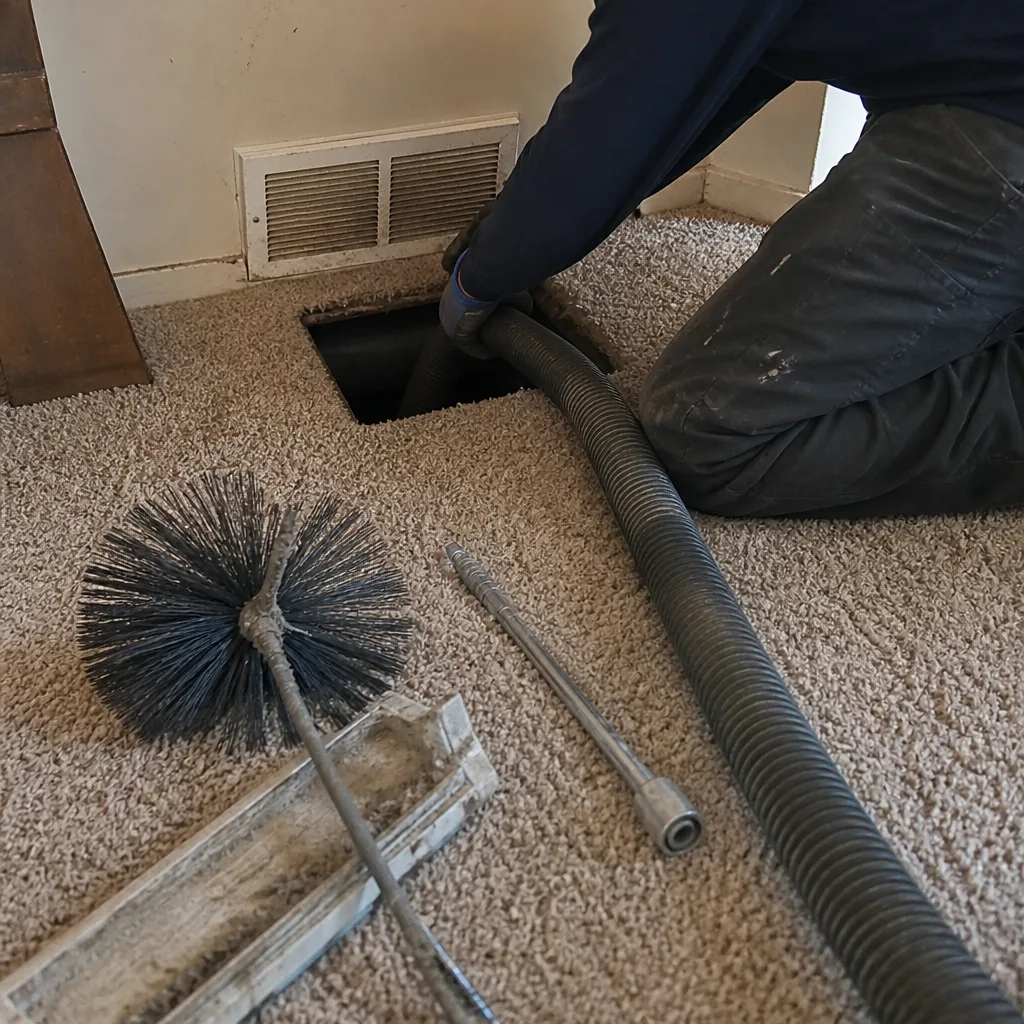 Before
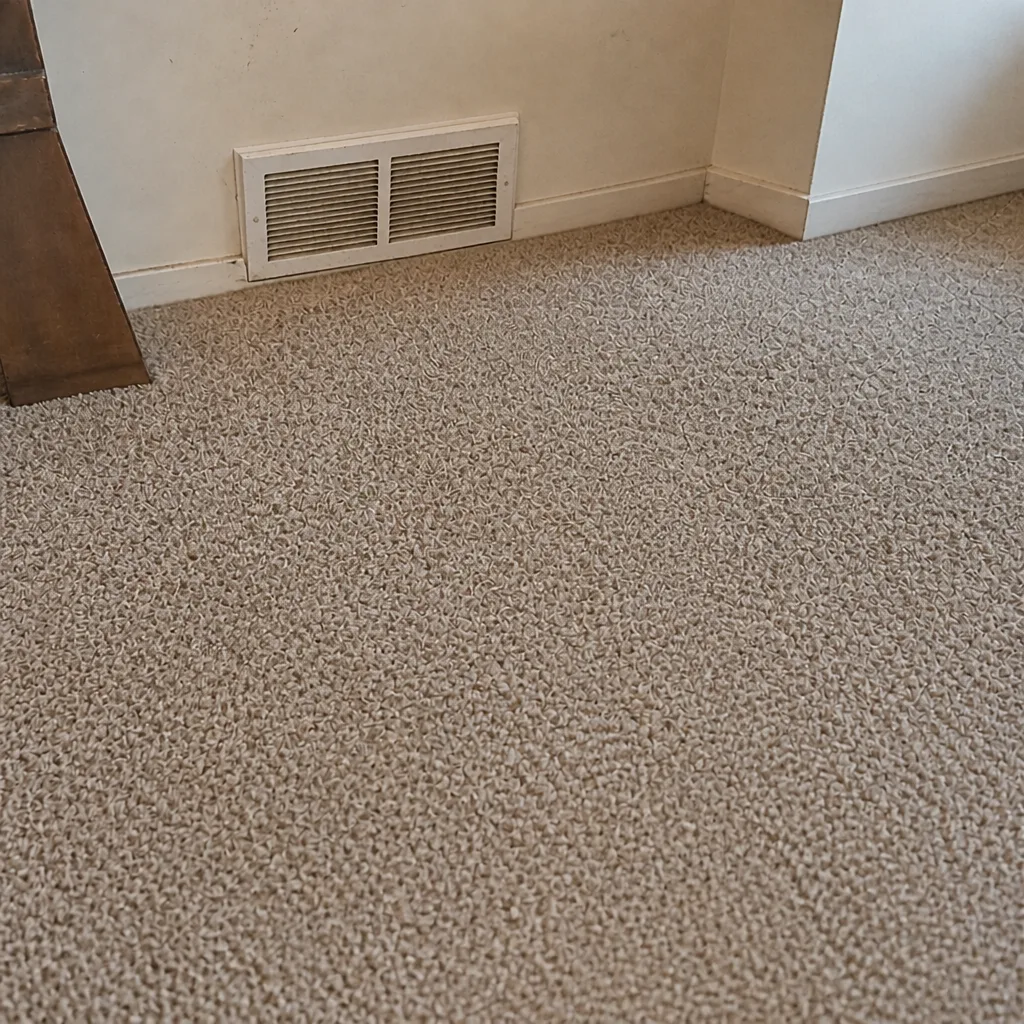 After
When to Call a Professional
Call a professional when you have confirmed contamination (mold, pest activity, visible debris plumes), when your home has just been through a renovation or new construction, when the ducts haven’t been cleaned in five years or more, or when you genuinely don’t know the history of the system. In Tooele, the dry, windy season picks up a lot of dust that finds its way into return ducts, and summer smoke events add another layer, so homes here often need cleaning on the earlier side of the standard three-to-five-year window. If you’re not sure, an inspection is the right first step. Tooele Air Duct Cleaning offers free estimates in Tooele – call (855) 658-4369. We answer 24/7. Fast dispatch from 7am to 7pm, Sunday through Friday.
Frequently Asked Questions
You can clean the register grilles and the first couple of inches of the duct boot with a shop vac, and that’s genuinely worthwhile. You can’t clean the interior of the duct runs, because a consumer vacuum generates roughly 50 to 150 CFM of airflow where a contractor-grade system generates 2,000 to 4,000 CFM. The debris moves but doesn’t leave. For anything past the register, call a professional.
Four signs point to yes: visible dust plumes coming out of registers when the system runs, a musty smell from the vents, a recent renovation or new construction project, or a system that hasn’t been cleaned in five or more years. If any of those apply, book an inspection. Call (855) 658-4369 for a free estimate.
Professional duct cleaning is worth it when it’s done correctly – meaning contractor-grade equipment, negative-air containment, and before-and-after photos of your actual ducts. It’s a scam when a company quotes a coupon price, shows up with a shop vac, spends 20 minutes in your house, and leaves without showing you what they did. The equipment and the verification are what separate the two. Call (855) 658-4369 with questions about what a real cleaning looks like.
Most homes need a full cleaning every three to five years. Tooele’s dust and wind make the shorter end of that range more common, and homes with pets, recent renovations, or allergy concerns in the household may want cleaning every two to three years. The honest answer for your specific home comes from an inspection, not a generic schedule.
It can. The most common problems are torn flex duct liners from pulling a rigid wand through at the wrong angle, dislodged mold colonies that get aerosolized into the house without containment, and pressure imbalances from partially cleaning some runs and not others. Staying with the register boots and grilles avoids all three. Call (855) 658-4369 if you’re unsure whether your attempt crossed that line.
Duct cleaning removes debris from the inside of the ducts. Duct sealing finds and seals the leaks at joints and connections where conditioned air escapes. They solve different problems, and most homes benefit from both – the cleaning addresses contamination, and the sealing addresses the energy loss that keeps your HVAC running harder than it needs to. Call (855) 658-4369 to talk through which your home needs.
The Bottom Line
The DIY vs. professional question isn’t really about whether you’re capable of holding a vacuum hose – it’s about whether your equipment can extract what’s inside your ducts. It can’t, and the CFM gap is the reason. Clean your registers and grilles, brush out the dryer vent lint, change the filter on schedule, inspect when something looks off. Those are real contributions. Everything past the duct boot needs a contractor-grade system with negative-air containment to do honestly, and the before-and-after photos are how you confirm it was done. If you’re ready to stop guessing, call Tooele Air Duct Cleaning at (855) 658-4369 for a free estimate. We answer 24/7. Fast dispatch from 7am to 7pm, Sunday through Friday.
Written by the team at Tooele Air Duct Cleaning.